
What Does It Mean To Live With Limits?
Exploring your true self in the second half of life.

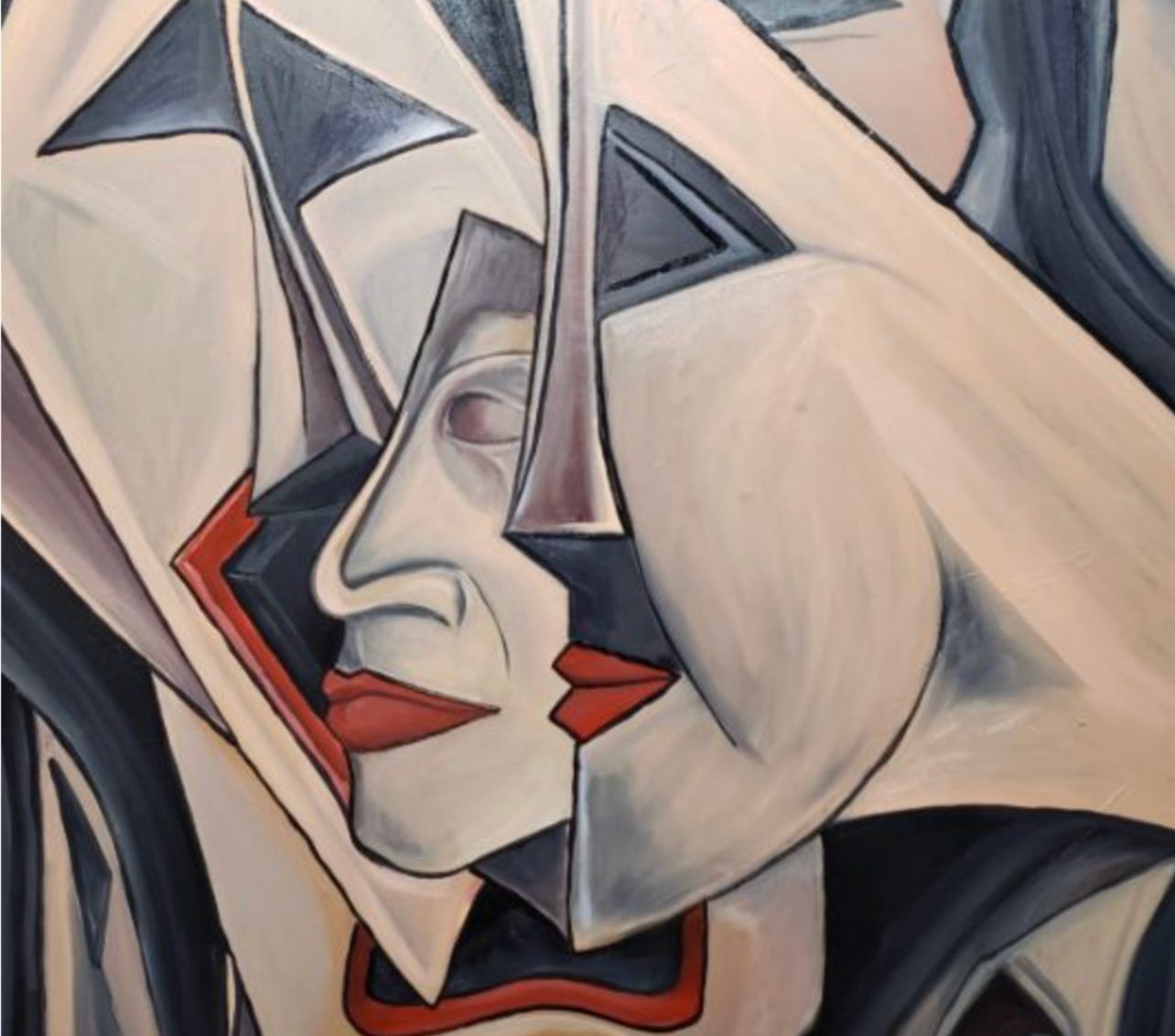
The first spring light peers over the horizon in the east. The world is different now. The air is thick and green. Trees are leafing out. Mayflies titter in the tall grass and carom off the windows and get stuck behind the screens.
I work out in the dimly lit room in the pre-dawn. It’s hard this morning, harder than usual. I’ve been pushing myself since the cancer diagnosis and I can feel it in my shoulders and biceps and wrists. Each pushup, curl, and lift is a story of limits.
A second opinion yesterday instilled more confidence that I can get through this. I’m young and healthy, my urologist said several times. He has a surgeon who’s the best in Texas.
“The catheter after the op is the worst part, but it’s not that bad,” he said. “Start the physical therapy now to strengthen your pelvic floor so you can get over the urinary incontinence faster. Get the PET scan. There are many advantages to removing the prostate at your age.”
Getting the surgery isn’t even a question in his mind. I shouldn’t even feel rushed. It’s slow growing.
“Could I do it in mid-June?”
“Fine. Be persistent and take care of it before 6 months.“
I have a sharp view on life these days, made sharper of course by all this nonsense. But it isn’t the first time I’ve picked my head up to look more closely. I’m 56, the kids are almost all out of the house, and the clock has already been ticking a little louder.
Because of that, last winter I dusted off a writing practice I put down 25 years ago for fatherhood and professional success to answer a couple of echoing questions: Who am I now and what’s important?
As Jung said about the second half of life — I am squarely here — this is when “the masks come off and we stop doing the things we think others expect us to do, and we begin to explore our true selves.”
The Jungian scholar James Hollis puts it this way:
In the second half of life, the questions change. ‘What does the soul ask of me?’ ‘What does it mean that I am here’ ‘Who am I apart from my roles, apart from my history?’ These questions necessarily raise a different agenda, and oblige us to ask questions of meaning. If the agenda of the first half of life is social, then the questions of the second half of life are spiritual, addressing the larger issue of meaning.
At some point along the way, I did indeed shift into the roles that others expected of me — roles of fatherhood and professional editor. That’s not a bad thing. I embraced those roles out of necessity and ambition. But it wasn’t always that way.
As a young man, I studied the existentialists, Samuel Beckett, and the Beats, and the idea of my own death helped fuel a life of urgency. I ran into the world knowing vaguely that I needed to be in it and not hidden behind a desk or stuck in a small town or lost in a haze of drugs and alcohol. I spent years backpacking in Central America, Southeast Asia, Nepal, and Europe. I sold t-shirts in Camden Market and planted 80,000 trees in Canada.
Of course, the irony of youth is that even though I used the idea of death to justify my life, I also felt limitless. It was easy philosophy. Aging, death, and finiteness were abstract ideas. The truth is, in youth we aren’t burdened by the heaviness of limits. Does age and disease mean that I should now be burdened more?
The morning sun peeks over the eastern horizon and lights up this new world. A different time of life isn’t coming. There’s no waiting for the next chapter. This is it.